


Check the soil each day, then water when it needs it. A potted mum’s needs change with its container, sun, wind and rain, so “every Tuesday” is not much of a watering plan.
You should be able to reach the pot without disturbing the display. If you cannot, contact Mother Pam before moving heavy or supporting pieces.
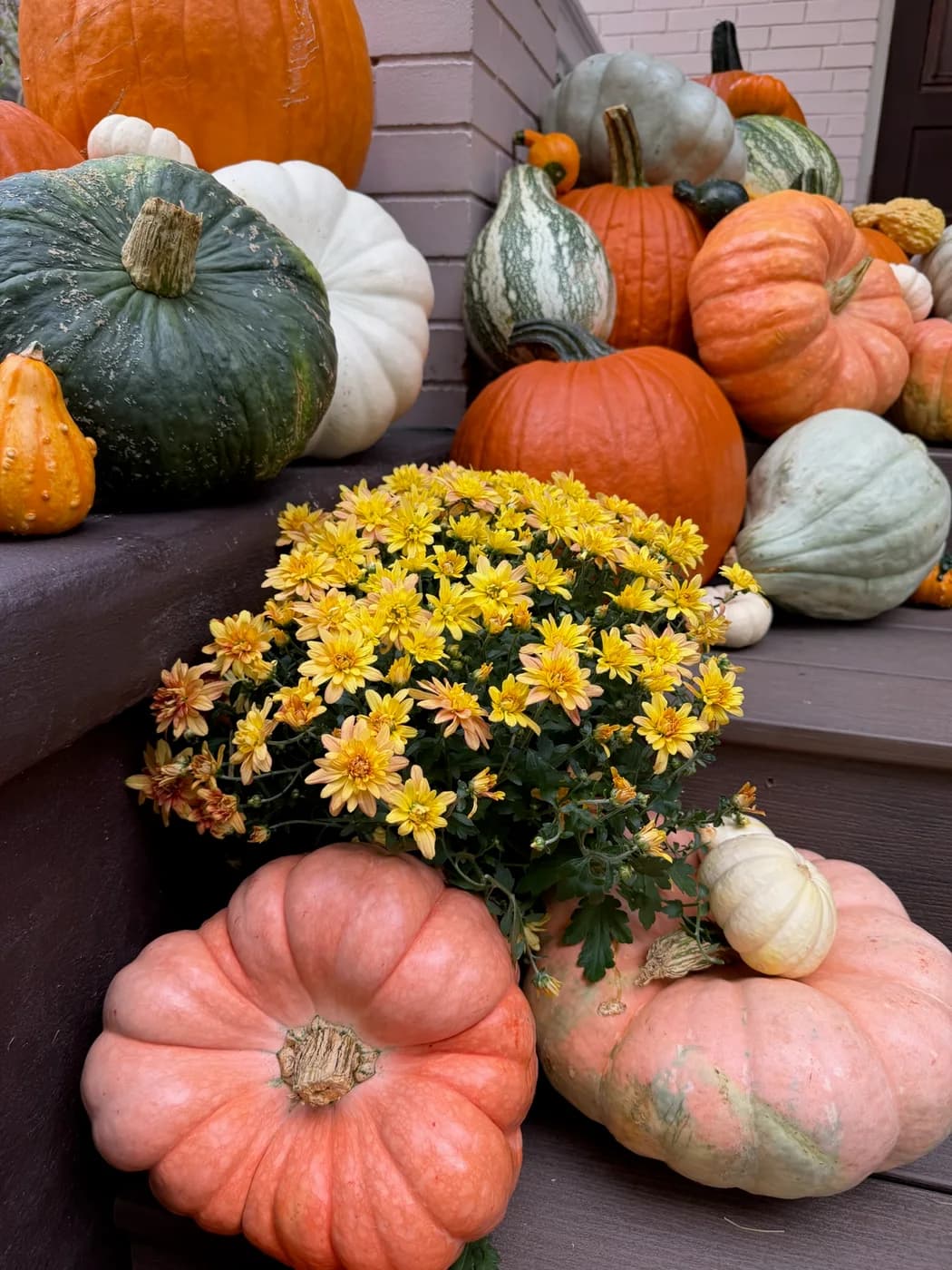
Check the soil, not just the flowers.
Feel the potting mix near the surface when it is safely accessible. If it is still moist, do not add water simply because a day has passed. If it feels dry, water the root ball thoroughly and allow excess water to drain.
Follow any care information supplied with the actual plant. Iowa State’s mum guidance emphasizes keeping container plants from drying out; the right frequency still depends on the conditions at your porch.
Aim the water into the pot.
Reach beneath the flowers and water the soil gently. Avoid spraying the entire display with a hose. The pumpkins do not need watering, and soaking the porch does not tell you how much reached the roots.
A sheltered plant can remain dry after rain because the roof or foliage intercepts it. Check the pot rather than assuming the weather has handled the job.
Know where the excess water goes.
A pot needs drainage. If a nursery pot sits inside a decorative outer container or on a saucer, check that water is not collecting around its base. Empty collected water when you can safely do so.
Do not leave the plant standing in a reservoir that was not designed for it. If emptying the container would require lifting something heavy or destabilizing the arrangement, ask us to help work out a practical watering plan.
Check the porch beneath it, too.
A pot, tray or riser can still hold moisture against the surface below. The useful setup needs both stable support and a way to manage drainage. A container is not automatically protection for painted wood or decking.
Tell us about any water collecting, darkening or marks you notice. Do not slide a heavy pot across a finished surface.
Fading flowers do not always mean a thirsty plant.
Flowering changes over the season. Before responding to every tired bloom with more water, check the soil. You can gently remove spent blooms if they are easy to reach; leave the pot and surrounding pumpkins undisturbed.
If the plant suddenly wilts or changes, send a photo with the watering history and where the pot sits. Repeatedly adding water without checking drainage can make it harder to understand the problem.
Keep mums out of pets’ reach.
Chrysanthemums are toxic to cats and dogs. Place and manage them so pets cannot chew them. If a pet may have eaten part of the plant, contact your veterinarian or an animal poison-control service promptly.
Tell us about pets before installation so access can be considered. An attractive arrangement should still work for the household.
A fall pot is not a promise of next year’s flowers.
If you want to plant the mum in the garden, keep its label and ask a local garden center about that variety and the planting conditions. Do not assume every flowering fall pot will overwinter successfully.
For the display in front of you, keep the care simple: check the soil, water the plant, manage the drainage and tell us if something seems wrong.